












Hospitality-inspired design impacts experience on college campuses
College campuses are evolving from a backdrop for learning into a hospitality-level experience that supports recruitment, retention, and long-term wellbeing. Drawing on hospitality principles, this guide explores how campus design can make higher education feel more like a place people choose to be not just a place they have to go.

Colleges and universities are navigating a range of challenges that affect both student outcomes and long-term stability. With increasing mental health concerns, burnout among faculty and staff, growing competition from alternative education pathways, and the sense of disconnection often felt by commuter students all add to these challenges.
College campuses are evolving from a backdrop for learning into a hospitality-level experience that supports recruitment, retention, and long-term wellbeing. When environments feel intuitive, generous, and welcoming, students and faculty are more likely to participate and build community. Drawing on hospitality principles, this guide explores how campus design can make higher education feel more like a place people choose to be, not just a place they have to go.

Why Design Matters on College Campuses
On today’s campuses, learning happens everywhere, not just in classrooms. Designing for college campuses must therefore support academic work, social connection, and restoration in equal measure.
When spaces are comfortable, clearly organized, and easy to navigate, they lower stress and help students focus on the experience instead of the logistics of finding a seat, a power outlet, or a quiet corner. Drawing from hospitality, the design of university campus interiors should anticipate needs before they’re voiced. Clear sightlines and intuitive wayfinding reduce cognitive load. Visible help points, concierge-style information desks, and welcoming thresholds signal that support is available.
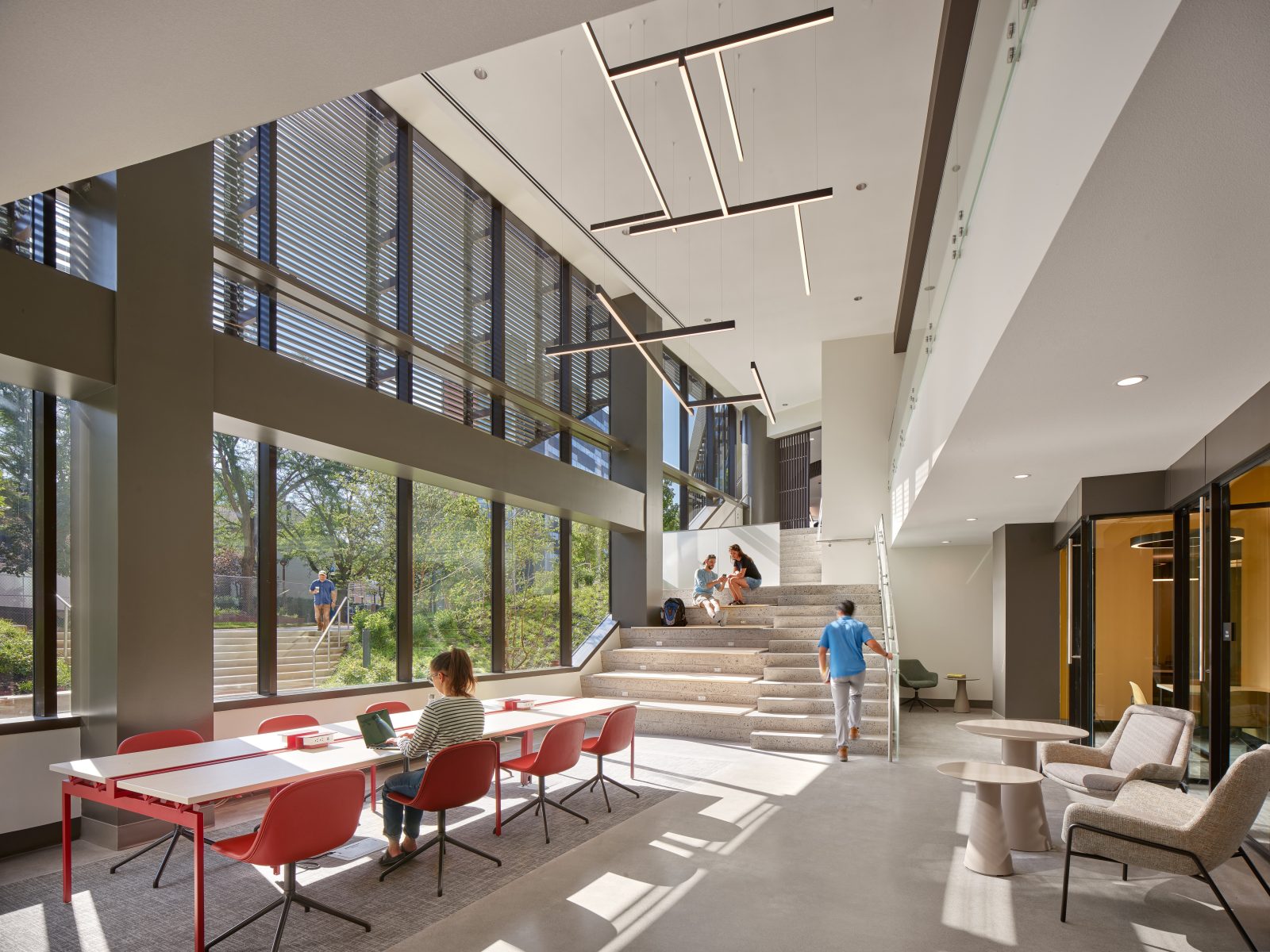
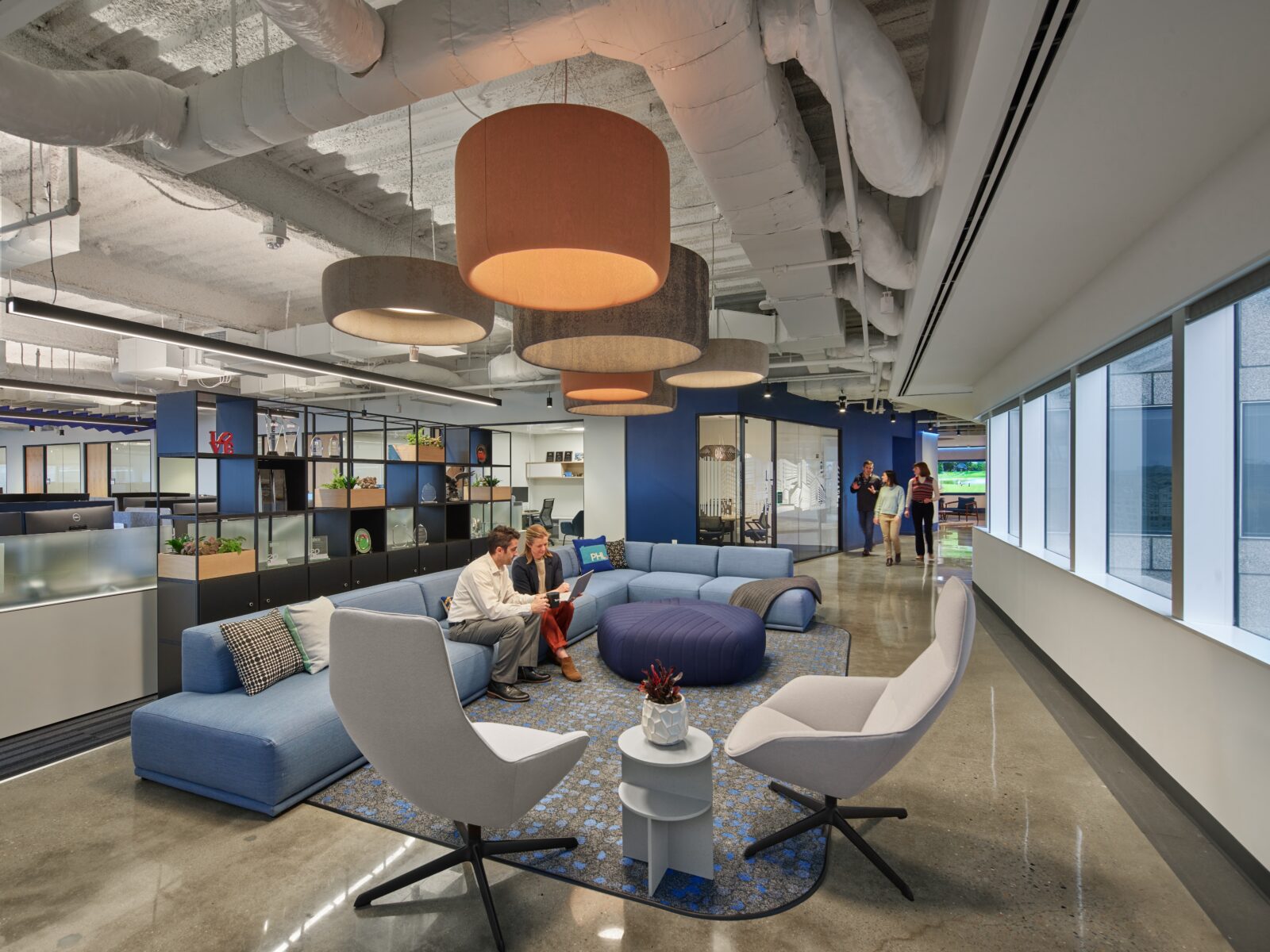
A sense of belonging grows when choice and comfort are treated as essentials, not extras. Hospitality-informed environments offer a spectrum of settings: quiet zones, semi-private booths, active collaboration areas, and casual lounges that feel more like a favorite café than a traditional study hall. Biophilic elements, ergonomic furnishings, and restorative nooks help modern university campus spaces feel safe, familiar, and emotionally supportive—especially for first-generation, commuter, or international students who may not yet feel at home.

Key Trends Shaping Campus Design
Hospitality principles are increasingly shaping the design of university campus interiors. MillerKnoll explores this by breaking it into three interconnected principles: Protection, Intellectual welcome, and Open table.
Together, these principles help newcomers move from uncertainty to confidence, providing a framework for campus design that supports student success and institutional wellbeing.

Protection: Reducing uncertainty and exposure
Like tourists in an unfamiliar place, newcomers are inherently vulnerable and lack the familiarity they need to feel secure. Campuses can meet this need through design and educational furniture that provides:
- Physical safety and security with visual transparency, intuitive wayfinding, and clear sightlines.
- Psychological protection shaped by trauma-informed design, supporting sensitive conversations and hierarchy-free interactions.
- Respite and recovery spaces that cater to personal preferences, with options including privacy, views to nature, and controllable lighting and temperature.
- Territory and ownership that give people a place of their own–whether a personalizable room, a reliable study spot, or secure storage for commuters.

Intellectual welcome: Encouraging a sense of belonging
The notion of intellectual welcome appears in spaces that help people share who they are and learn from others. Key elements include:
- Exchange of ideas supported by layouts that adapt to cultural norms around collaboration, presentation, and privacy.
- Inclusive design that respects the diverse cultural, social, and spiritual practices students and faculty bring to campus–including how they gather, celebrate, eat, and observe traditions.
- Sensory design, such as lighting control, acoustic options, quiet and collaborative zones, and movement-friendly seating.

Open Table: Supporting organic interaction
Rooted in the universal act of sharing meals at a common table, this concept extends beyond dining into any space where people gather and connect, including:
- Literal table fellowship where everyone eats together at the same level, reducing hierarchy and encouraging ease.
- Community gatherings such as performances, exhibitions, pep rallies, or informal outdoor gatherings.
- Design for “sobremesa,” or lingering conversation, encouraging people to stay, connect, and participate without feeling rushed.
Case Studies: Hospitality-Informed Approaches that Work
Libraries are transforming into mixed-use hubs that borrow heavily from hotel lobbies and coworking spaces. Quiet reading rooms coexist with active project zones, media labs, and studios with movable walls. A mix of seating like soft lounge chairs, booths, long communal tables, and high top tables accommodates different study styles and reinforces the role of libraries as collaborative learning spaces and social anchors.
Student housing interior design is also taking cues from hotels and long-stay accommodations. Suite layouts that define personal micro-territories, generous storage, and social kitchens encourage both autonomy and peer support. Shared amenities—project rooms, maker spaces, wellness lounges, and communal living rooms—bridge living and learning. Attention to acoustic control, daylight, and intuitive wayfinding helps students decompress and navigate with confidence, reinforcing campus design that supports both rest and engagement.
Planning Considerations for Campus Leaders
- Align space types with co-curricular models, from active-learning classrooms and project studios to informal collaborative learning spaces, lounges, and hospitality-style gathering areas.
- Use hospitality-informed journey mapping to understand how students, faculty, staff, and visitors move through campus, then refine touchpoints—entries, lobbies, service desks, and circulation paths—to reduce friction and support inclusivity.
- Specify durable, sustainable, and modular furnishings that balance comfort with longevity, allowing campus designs to be refreshed through textiles, lighting, and accessories rather than full replacement.
- Invest in robust technology infrastructure and acoustic strategies that support hybrid learning, virtual events, and digital collaboration while keeping tech unobtrusive in modern classroom design.
- Prioritize wellness and belonging with daylight, biophilic elements, ergonomic seating, and inclusive amenities in student housing interior design, dining spaces, and student center design, ensuring that every space feels welcoming and easy to use.
When institutions treat design for college campuses as a hospitality-informed, human-centered practice, they create environments that feel both high-performing and deeply welcoming. The payoff is tangible: stronger engagement, improved retention, and campus designs that reflect the institution’s mission in every interaction. Thoughtful, hospitality-inspired interiors help people feel safe, oriented, and valued—turning modern university campuses into places where students, faculty, and staff genuinely want to spend their time.

